December 27, 2024 • By Melanie Yukov, Root 2 Rise Wellness
If you’re struggling with sluggish digestion, puffiness, or chronic inflammation, a key piece of the healing puzzle that’s often overlooked is the lymphatic system. Supporting your lymphatic system helps your body move waste, reduce swelling, and improve overall wellness.
What the Lymphatic System Does:
The lymphatic system is your body’s drainage network. It may not get the attention of the heart or gut, but it’s essential for long-term health. It is responsible for:
- Moving waste and toxins
- Supporting immune function
- Filtering blood
- Absorbing and transporting fats
But when your lymphatic system gets congested, everything can feel heavy—both physically and emotionally.
Signs of Lymphatic Congestion
Many women I work with notice symptoms they think are “just aging,” but they often trace back to lymphatic stagnation:
- Dry or itchy skin
- Unexplained soreness or stiffness
- Puffy eyes or swelling
- Digestive sluggishness
- Allergies and congestion
- Water retention or weight gain
Sound familiar?
What Causes Lymphatic Backups?
The lymph system can get clogged due to chronic stress, lack of daily movement, dehydration, or shallow breathing (often tied to vagus nerve dysregulation). When this happens, the lymph can’t do its job of clearing toxins, balancing fluids, and nourishing your immune system.
Natural Ways to Support Lymphatic Flow
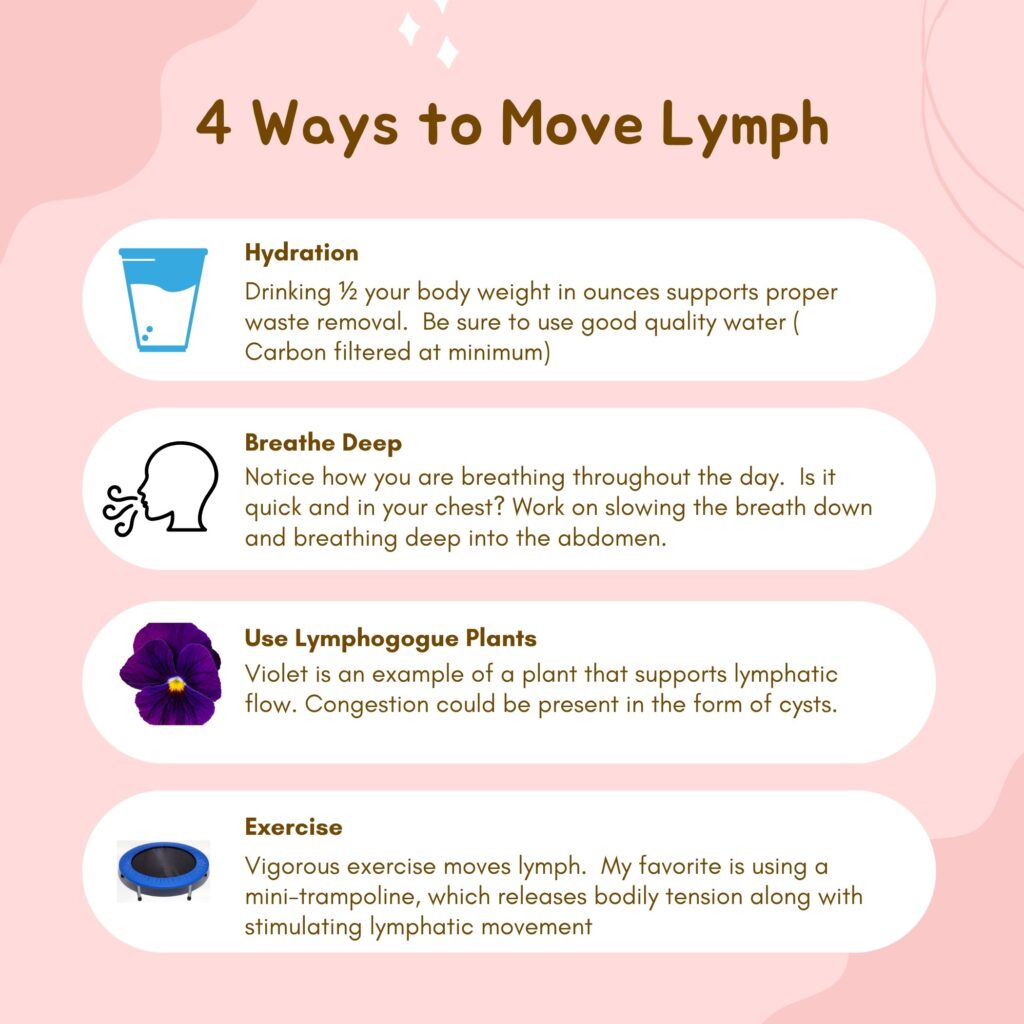
The good news: the lymph loves rhythm and gentle movement. With consistent support, you can restore flow and resilience:
- Myofascial massage – releases fascia and frees stuck fluid
- Rebounding – using a mini-trampoline stimulates lymph movement
- Diaphragmatic breathing – activates the vagus nerve while pumping lymph
- Hydration – water is the essential vehicle for lymph flow. Check out this blog post for more on dehydration and the lymph connection. https://bodyballancer.co.uk/hydration-and-the-lymphatic-system/. Also, keep in mind that overhydrating is also not good for your cells. If you crave over half your body weight in ounces, it may be that you are depleted in minerals. Adding electrolytes and electrolyte water can be helpful in such a case.
And of course—plants can be some of the most powerful allies.
Violet: A Gentle Herbal Ally for the Lymph
Violet (Viola spp.) may look delicate with its purple blooms, but it’s a potent lymphatic herb. Traditionally known as a lymphatic alterative, violet helps move and cleanse stagnant lymph while soothing both body and emotions. Violet relieves swollen glands, cysts, or puffiness, plus supports sluggish elimination and detox pathways. It’s a very cooling and soothing herb that nourishes and moistens dry tissues. In addition, violet eases emotional stagnation—especially grief, tension, or “stuck” feelings in the chest. Watch my short video introduction to violet and the lymphatic system here:
How Violet Supports Lymphatic Health
How to Work with Violet
- Infusion (tea): Calms and moistens tissues while supporting lymph movement.
- Tincture: To gently stimulate flow and reduce congestion.
- Poultice or infused oil: Applied topically for cysts, swollen glands, or breast tenderness.
Pro Tip: Pair violet with deep breathing exercises. Your breath acts as a pump for the lymph, creating a synergy between plant support and nervous system regulation.
flow moving again—inside and out.
Ready to Support Your Lymphatic System?
With gentle movement, herbs like violet, hydration, and mindful breathing, you can restore lymphatic flow and feel lighter—inside and out.
Book your free consultation to explore herbal and lifestyle strategies for improving lymphatic health.